Marine Collagen vs Bovine Collagen: Which Is Better?
Last updated: June 2026
Marine Fish Collagen and bovine collagen both provide Type I collagen peptides for skin, joints, and connective tissue. They differ in how well the body absorbs them. Here is what the research shows.
What Is Collagen and Why Does It Matter?
Collagen is the most abundant protein in the human body, making up approximately 30% of total protein mass. It forms the structural scaffold of skin, tendons, ligaments, cartilage, and bone. Type I collagen, the most abundant type, makes up approximately 80% of the skin's dermal layer, providing tensile strength, elasticity, and hydration.
Collagen production drops roughly 1% a year after age 25 (Journal of Investigative Dermatology). By 40, most people have lost around 20% of dermal collagen. That shows up as reduced elasticity, deeper lines, stiffer joints, and slower skin repair. Oral collagen gives the body the amino acid building blocks it needs to make new collagen.
Marine Fish Collagen vs Bovine Collagen, The Key Differences
Source
Marine Fish Collagen is extracted from the skin, scales, and bones of fish, typically tilapia, cod, or snapper. It is predominantly Type I collagen. Bovine collagen is extracted from the hides, bones, and cartilage of cattle. It provides both Type I and Type III collagen, with Type III supporting gut lining and cardiovascular tissue as well as skin.
Molecular Weight and Bioavailability
The critical practical difference is molecular weight. Marine Fish Collagen peptides have a lower molecular weight (approximately 300–800 Da) compared to bovine collagen peptides (typically 2,000–5,000 Da). Lower molecular weight means smaller particles that cross the intestinal wall more efficiently and reach the bloodstream faster. A 2019 comparative absorption study published in Food Chemistry found that Marine Fish Collagen showed significantly higher bioavailability and faster plasma absorption compared to bovine collagen peptides of the same dose.
Type I Collagen Content
For skin-specific goals, Type I collagen is the primary target, it is the dominant collagen type in the dermal layer. Marine Fish Collagen is almost exclusively Type I, making it the most targeted format for skin elasticity and hydration outcomes. Bovine collagen provides Type I and III, Type III is less relevant for skin but relevant for gut and cardiovascular tissue.
Halal Compliance
Bovine collagen is Halal only if the source cattle were slaughtered according to Halal requirements, which requires specific certification that varies significantly between brands. Marine Fish Collagen from permissible fish species is inherently more straightforward to certify as Halal. All Glowming products are formally Halal certified, using Marine Fish Collagen that meets Halal compliance standards.
Taste and Formulation
Marine Fish Collagen has a lighter, more neutral taste profile than bovine collagen, which has a more pronounced savoury note. This makes Marine Fish Collagen easier to formulate into flavoured drink powders without taste interference, one reason it is preferred in the functional drinks market.
What the Research Says About Oral Collagen for Skin
A 2019 meta-analysis published in the Journal of Drugs in Dermatology reviewed 11 randomised controlled trials on oral collagen supplementation and skin outcomes. The analysis found statistically significant improvements in skin elasticity, hydration, and dermal collagen density across all 11 studies, with effects beginning at 4–8 weeks of consistent supplementation and increasing with duration. The meta-analysis included both marine and bovine collagen sources, with marine sources showing consistently higher bioavailability markers.
A separate 2021 study published in Nutrients found that Marine Fish Collagen supplementation for 12 weeks produced significant improvements in skin moisture, transepidermal water loss, and skin roughness compared to placebo in women aged 40–60.
Marine Collagen in Glowming Products
“I am 52 and my skin has not looked this good in years. People keep asking what I am doing differently. I tell them it is the Milky Matcha.”
Anita R., verified South African customer, Glowming Milky Matcha
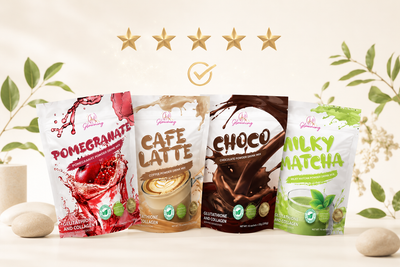
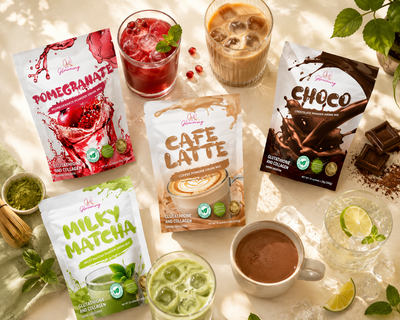
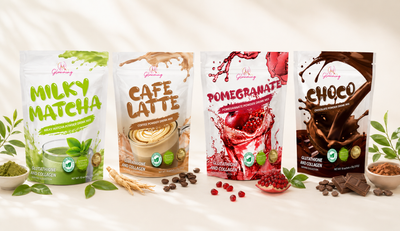
All four Glowming flavours contain Marine Fish Collagen as a verified core ingredient, chosen specifically for its Type I collagen dominance and superior bioavailability profile.
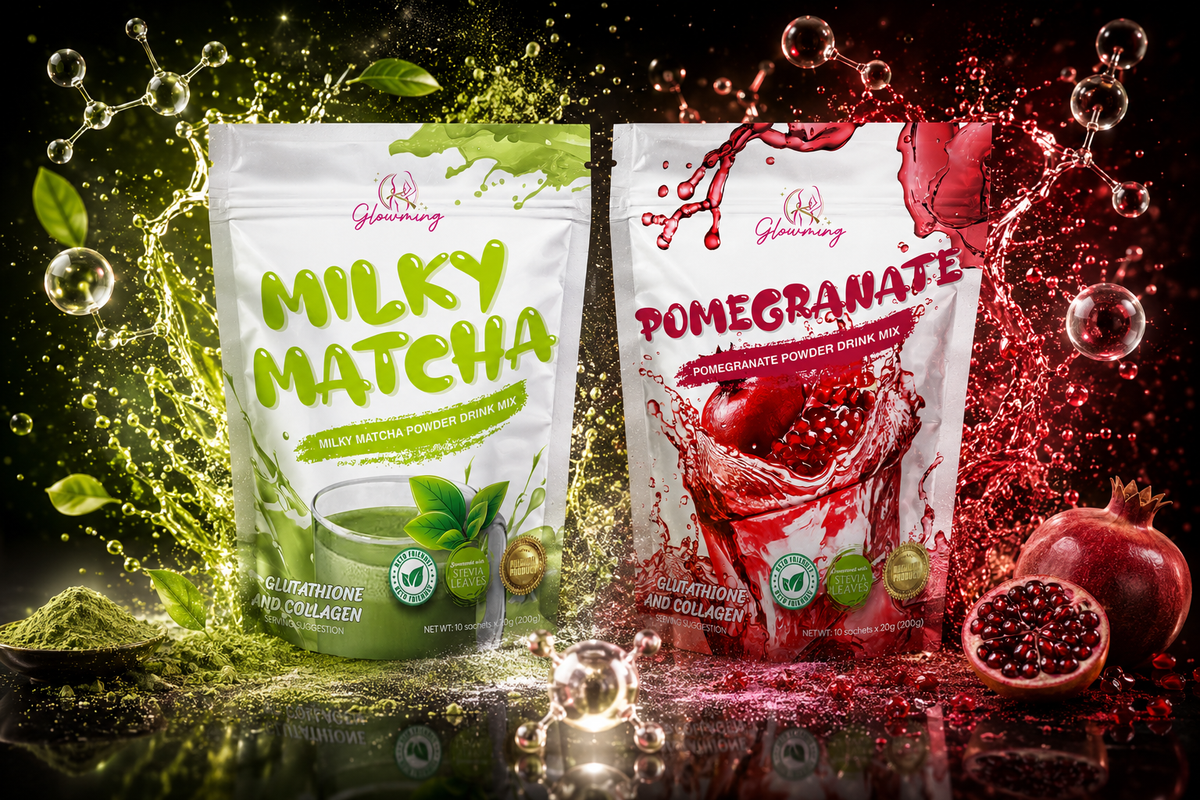
- Glowming Milky Matcha, Marine Collagen + Sakura Extract + Vitamin E + Zinc (the most skin-targeted combination in the range)
- Glowming Pomegranate, Marine Collagen + Glutathione + Pomegranate Extract (antioxidant protection supports collagen preservation)
- Glowming Café Latte, Marine Collagen + Aloe Vera (Vitamin C supports collagen synthesis)
- Glowming Choco, Marine Collagen + Ashwagandha (cortisol reduction protects collagen from stress-induced breakdown)
Frequently Asked Questions
Is marine collagen better than bovine collagen for skin?
For skin-specific goals, marine collagen's lower molecular weight and higher Type I content make it the preferred format based on current absorption and efficacy research. For joint support or gut lining (which benefits from Type III collagen), bovine collagen's dual Type I/III profile has advantages. For most South Africans using collagen for skin health and anti-ageing, Marine Fish Collagen is the superior choice.
How much collagen do I need per day?
Most clinical research uses doses of 2.5g–10g of collagen peptides per day. The 2019 meta-analysis showing skin improvements used doses across this range, with 2.5g–5g being the most common in skin-specific studies. Glowming products contain Marine Fish Collagen within this evidence-based supplementation range per sachet.
Does collagen actually get absorbed when you drink it?
Yes, the key is that dietary collagen is hydrolysed (broken into peptides) before absorption. These collagen-specific peptides (particularly hydroxyproline-containing dipeptides) are detected in the bloodstream after oral ingestion and have been shown to stimulate fibroblasts in the skin dermis to produce new collagen. The drink powder format, where collagen is already partially hydrolysed, optimises this absorption process.
Is Marine Fish Collagen safe?
Marine Fish Collagen has an excellent safety profile and is well-tolerated in healthy adults. It is not suitable for individuals with fish allergies. For those observing Halal or kosher dietary requirements, source certification matters, Glowming products are formally Halal certified. Consult a healthcare professional before use during pregnancy or breastfeeding.
This product is not intended to diagnose, treat, cure, or prevent any disease. Consult a healthcare professional before use. Individual results may vary.